
Upcoming
Information Sessions
Eating Disorders Families Australia’s (EDFA) National EDucation Program is accredited to the National Safety and Quality Digital Mental Health Standards.
Eating Disorders Families Australia delivers twice-monthly Information Sessions for families and carers of individuals with eating disorders.
Watch A FREE Information Session

Watch a FREE Session
Renowned Eating Disorder Therapist, Carolyn Costin, joined EDFA at an Information Session. This session is freely available to Australian carers to learn more about how to strengthen your loved one’s ‘healthy self’.

Become A Member
Members can access our live Information Sessions for free as part of membership (you’ll need to register for each Information Session). EDFA is currently offering FREE membership for carers in SA, QLD, NT & Regional VIC.

Watch Past Sessions
EDFA membership also gives you access to recordings of Information Sessions after the event. All sessions are recorded, and can be accessed by members after the event.

Join A Session in Your Language
With credentialed interpreters fluent in over 150 languages, we can now better support carers from culturally and linguistically diverse backgrounds.
Upcoming Information Sessions
As a lived experience organisation, we are proud to share stories of those with their own lived experience, giving strength and hope to families that their loved ones can recover and lead fulfilling lives. Information sessions also feature clinicians focusing on medical and nutritional aspects of dealing with an eating disorder in the family.
As EDFA takes a unbiased approach to treatment, clinicians, and pathways of care, we are proud to share knowledge from speakers on different treatments and approaches.
What to expect
- One-hour speaker-led sessions, followed by a 15-minute Q&A
- Hosted by carers with their own lived experience caring for a loved one with an eating disorder
- No expectation to share – feel free to come along and listen
- You can access the slides shared at the beginning of each Information Session here
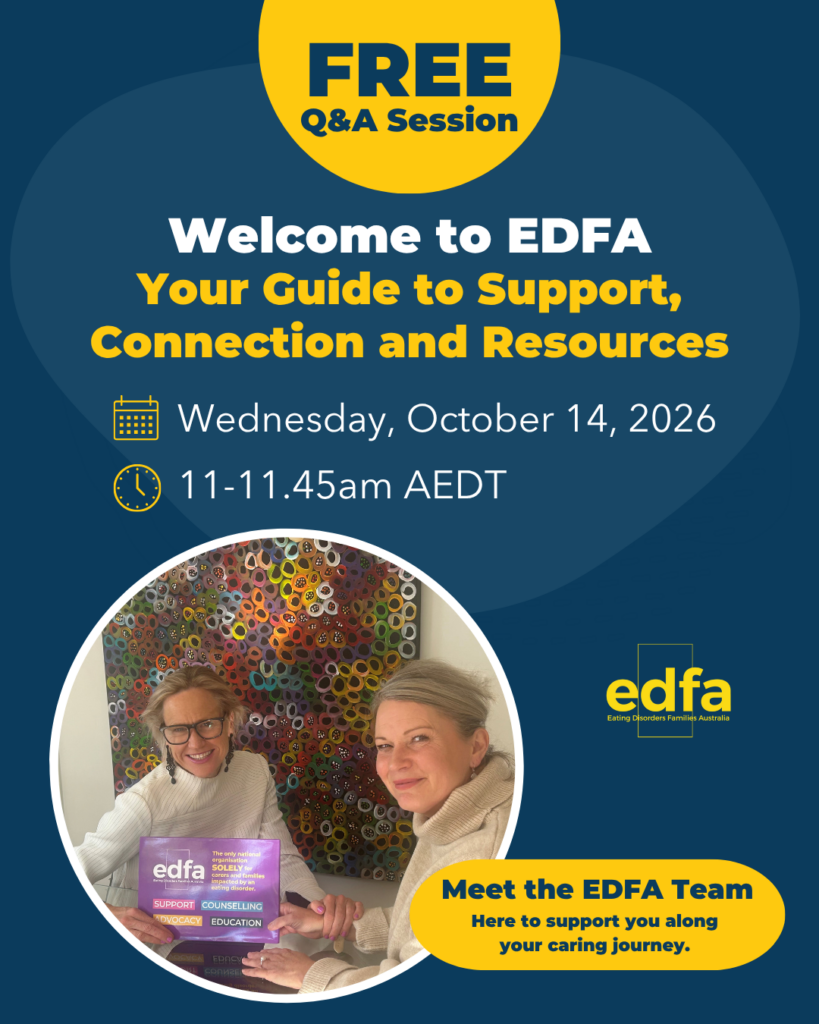
Welcome to EDFA is an opportunity to meet the team and explore the support, connection and resources available to you as a carer. We’ll introduce EDFA’s range of programs and services and explain how to access them when the time is right for you. Whether you’re new to EDFA or have already connected with one of our programs, this session is a chance to learn more, ask questions and discover the different ways EDFA can support you along the way.
Elise is a Nurse Practitioner in the Eating Disorders Acute Team at the Queensland Children’s Hospital in Brisbane. She cares for all young people admitted with medical concerns secondary to their eating disorder. Elise also has a strong interest in clinical ethics and undertakes ethics research in the intersection of healthcare and social media as it relates to young people.
This session is open to anyone.

Dr Norton has extensive clinical experience as a Senior Paediatric Dietitian working across the acute and community sector in the area of eating disorders, over the past two decades. She is passionate about integrating preventive interventions within the wider community and has research interests include the early years, food communication and preventive interventions. Her PhD; Promoting positive food parenting practices for disordered eating prevention: Adopting a knowledge translation approach (completed in 2023), has resulted in an intervention designed for parents to reduce their child’s risk of developing disordered eating. Dr Norton is passionate about using evidenced based strategies and frameworks adopted from social marketing, co-design and knowledge translation. Dr Norton is currently employed as a research fellow at Western Sydney University working on the SHiNE project (Supporting Healthful Initiatives in Nutrition Education) and is employed as a senior paediatric dietitian with Gold Coast Health Service. Treehouse Nutrition Services is her consultancy business enabling her to collaborate with other organisations, including The Embrace Collective science to assist families in the real world.
This session is open to anyone.

Dr Norton has extensive clinical experience as a Senior Paediatric Dietitian working across the acute and community sector in the area of eating disorders, over the past two decades. She is passionate about integrating preventive interventions within the wider community and has research interests include the early years, food communication and preventive interventions. Her PhD; Promoting positive food parenting practices for disordered eating prevention: Adopting a knowledge translation approach (completed in 2023), has resulted in an intervention designed for parents to reduce their child’s risk of developing disordered eating. Dr Norton is passionate about using evidenced based strategies and frameworks adopted from social marketing, co-design and knowledge translation. Dr Norton is currently employed as a research fellow at Western Sydney University working on the SHiNE project (Supporting Healthful Initiatives in Nutrition Education) and is employed as a senior paediatric dietitian with Gold Coast Health Service. Treehouse Nutrition Services is her consultancy business enabling her to collaborate with other organisations, including The Embrace Collective science to assist families in the real world.
This session is open to anyone.
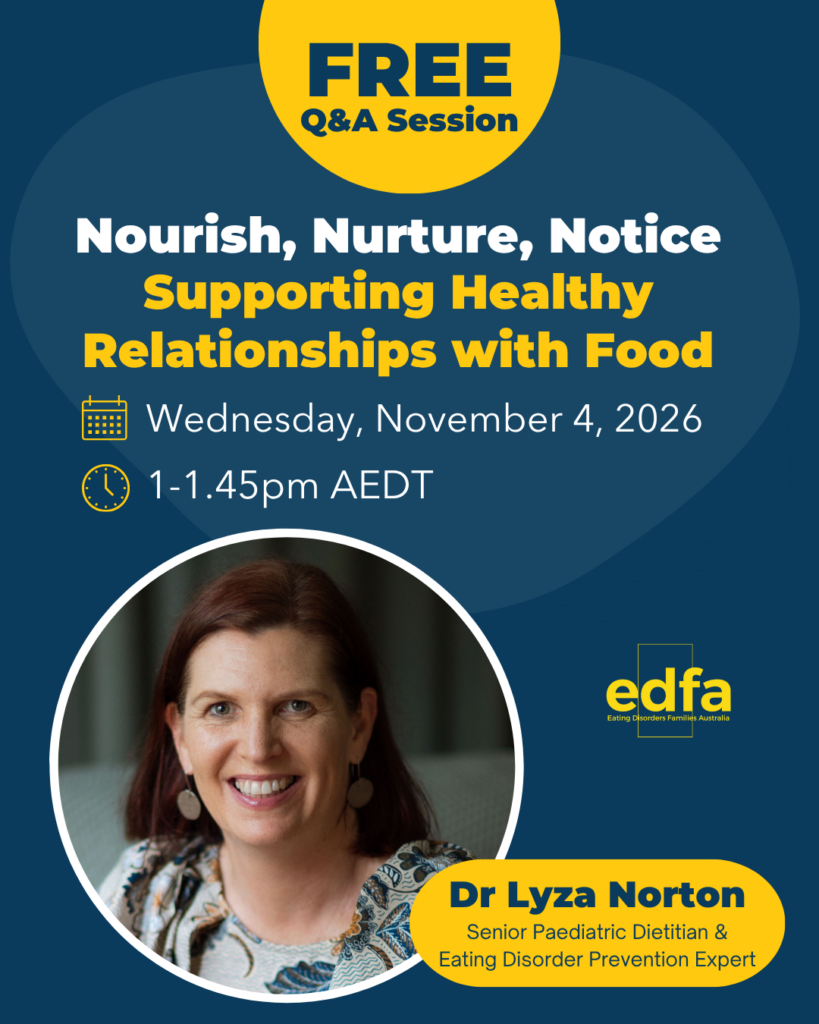
Join us for this lunchtime session with Dr Lyza Norton, Senior Paediatric Dietitian and clinical advisor to EDFA’s Nourish, Nurture, Notice prevention program. With more than 20 years of experience working with children, adolescents and families across acute and community health settings, Dr Norton will explore how parents can foster positive relationships with food, body image and eating from an early age. She will share practical, evidence-informed strategies to help parents recognise early warning signs, respond with confidence, and create supportive home environments that promote lifelong wellbeing. Whether you’re looking to build your knowledge or simply want reassurance that you’re on the right track, this interactive session is a valuable opportunity to learn from one of Australia’s leading paediatric dietitians. Bring your questions and join the conversation.
Dr Norton has extensive clinical experience as a Senior Paediatric Dietitian working across the acute and community sector in the area of eating disorders, over the past two decades. She is passionate about integrating preventive interventions within the wider community and has research interests include the early years, food communication and preventive interventions. Her PhD; Promoting positive food parenting practices for disordered eating prevention: Adopting a knowledge translation approach (completed in 2023), has resulted in an intervention designed for parents to reduce their child’s risk of developing disordered eating. Dr Norton is passionate about using evidenced based strategies and frameworks adopted from social marketing, co-design and knowledge translation. Dr Norton is currently employed as a research fellow at Western Sydney University working on the SHiNE project (Supporting Healthful Initiatives in Nutrition Education) and is employed as a senior paediatric dietitian with Gold Coast Health Service. Treehouse Nutrition Services is her consultancy business enabling her to collaborate with other organisations, including The Embrace Collective science to assist families in the real world.
This session is open to anyone.
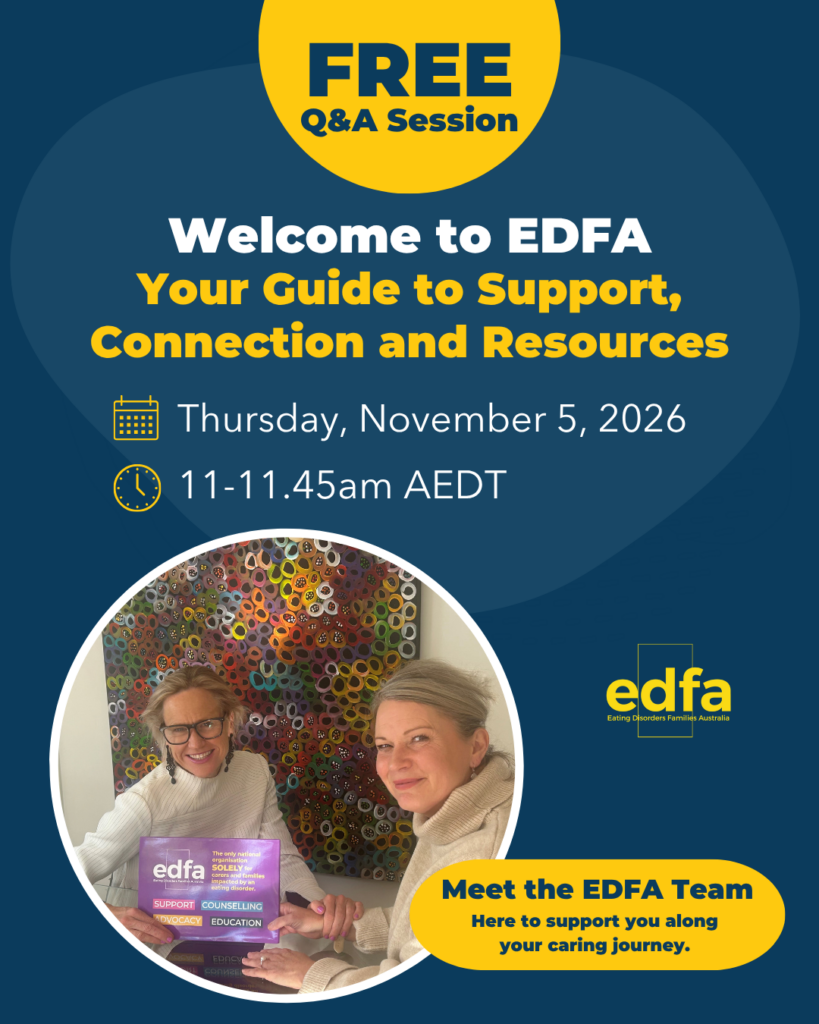
Welcome to EDFA is an opportunity to meet the team and explore the support, connection and resources available to you as a carer. We’ll introduce EDFA’s range of programs and services and explain how to access them when the time is right for you. Whether you’re new to EDFA or have already connected with one of our programs, this session is a chance to learn more, ask questions and discover the different ways EDFA can support you along the way.
Dr Norton has extensive clinical experience as a Senior Paediatric Dietitian working across the acute and community sector in the area of eating disorders, over the past two decades. She is passionate about integrating preventive interventions within the wider community and has research interests include the early years, food communication and preventive interventions. Her PhD; Promoting positive food parenting practices for disordered eating prevention: Adopting a knowledge translation approach (completed in 2023), has resulted in an intervention designed for parents to reduce their child’s risk of developing disordered eating. Dr Norton is passionate about using evidenced based strategies and frameworks adopted from social marketing, co-design and knowledge translation. Dr Norton is currently employed as a research fellow at Western Sydney University working on the SHiNE project (Supporting Healthful Initiatives in Nutrition Education) and is employed as a senior paediatric dietitian with Gold Coast Health Service. Treehouse Nutrition Services is her consultancy business enabling her to collaborate with other organisations, including The Embrace Collective science to assist families in the real world.
This session is open to anyone.
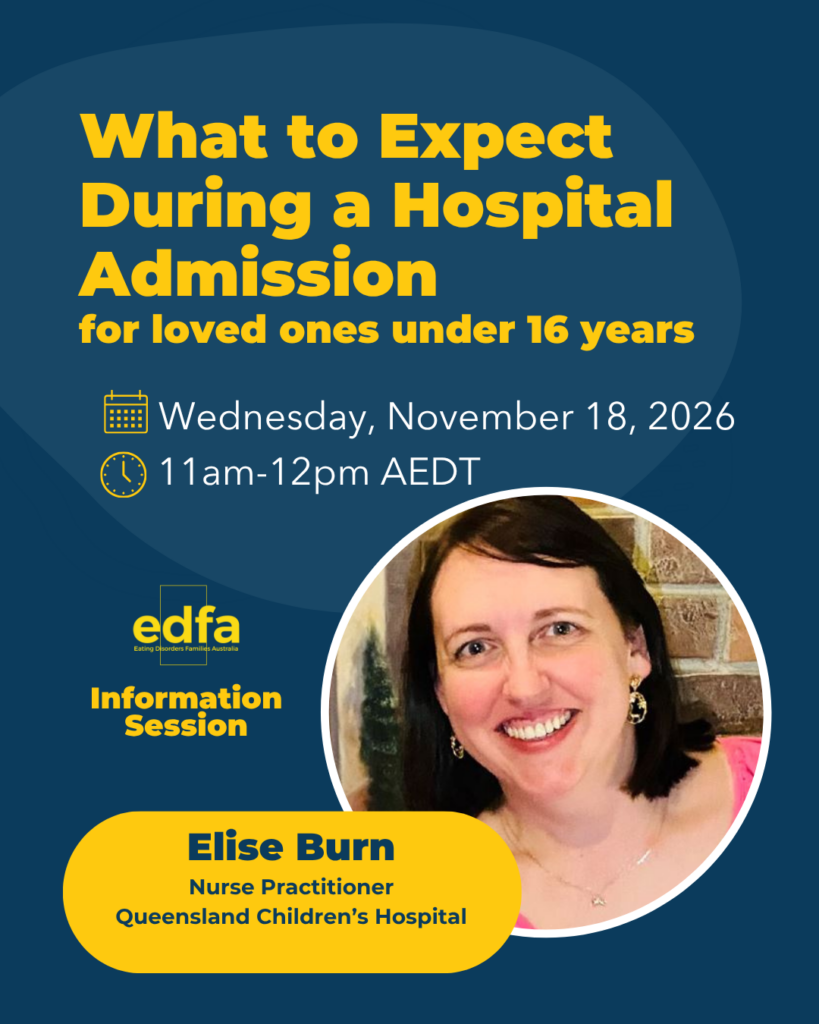
When a young person with an eating disorder requires hospital admission, it can be an unfamiliar and overwhelming experience for the whole family. Understanding what to expect, why different approaches to care may be needed, and the role carers can play can help families feel more prepared and supported. This EDucation Information Session will explore what a hospital admission may look like when caring for a young person under 16 with an eating disorder. We’ll step through the admission journey, from arriving at hospital and understanding the care team, through to medical stabilisation, nutrition and mealtime support, communication and planning for discharge. Importantly, the session will also explore the role of carers throughout an admission, including how they can work alongside the treating team, support their young person and navigate some of the challenges that may arise. While every young person’s admission and treatment will be different, this session aims to help carers understand the hospital environment, know what questions they can ask and feel more confident navigating an admission if and when hospital care is needed.
Elise is a Nurse Practitioner in the Eating Disorders Acute Team at the Queensland Children’s Hospital in Brisbane. She cares for all young people admitted with medical concerns secondary to their eating disorder. Elise also has a strong interest in clinical ethics and undertakes ethics research in the intersection of healthcare and social media as it relates to young people.
This session is open to EDFA members only.
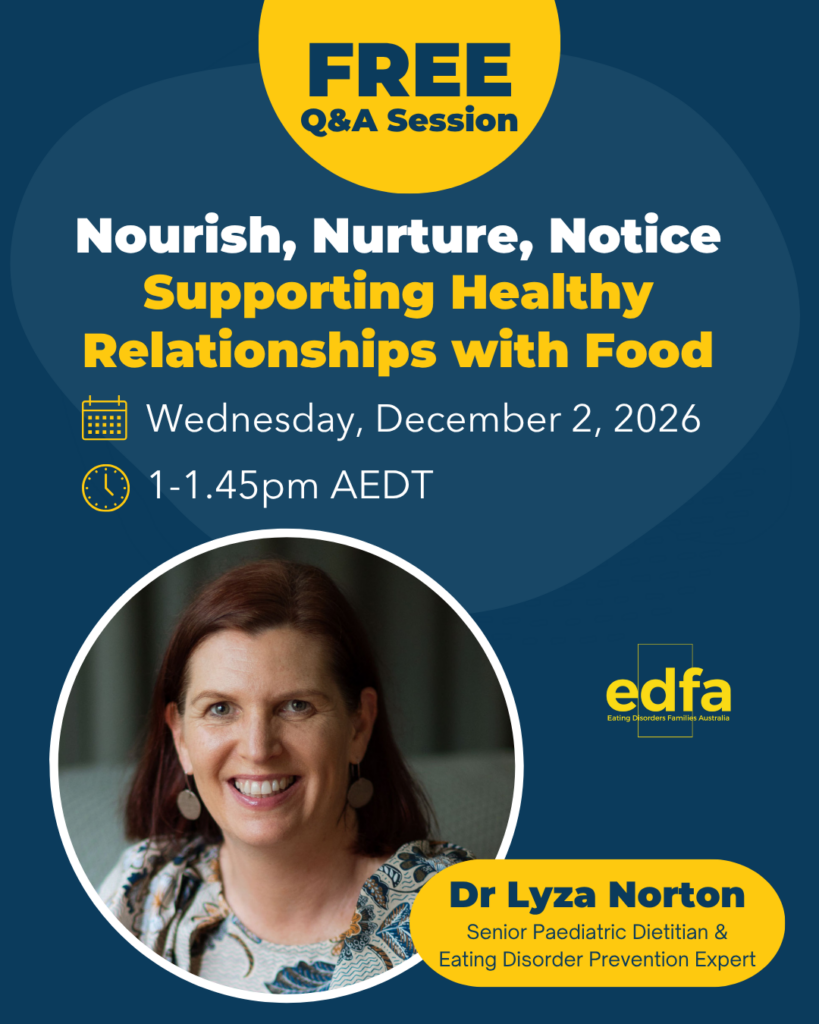
Join us for this lunchtime session with Dr Lyza Norton, Senior Paediatric Dietitian and clinical advisor to EDFA’s Nourish, Nurture, Notice prevention program. With more than 20 years of experience working with children, adolescents and families across acute and community health settings, Dr Norton will explore how parents can foster positive relationships with food, body image and eating from an early age. She will share practical, evidence-informed strategies to help parents recognise early warning signs, respond with confidence, and create supportive home environments that promote lifelong wellbeing. Whether you’re looking to build your knowledge or simply want reassurance that you’re on the right track, this interactive session is a valuable opportunity to learn from one of Australia’s leading paediatric dietitians. Bring your questions and join the conversation.
Dr Norton has extensive clinical experience as a Senior Paediatric Dietitian working across the acute and community sector in the area of eating disorders, over the past two decades. She is passionate about integrating preventive interventions within the wider community and has research interests include the early years, food communication and preventive interventions. Her PhD; Promoting positive food parenting practices for disordered eating prevention: Adopting a knowledge translation approach (completed in 2023), has resulted in an intervention designed for parents to reduce their child’s risk of developing disordered eating. Dr Norton is passionate about using evidenced based strategies and frameworks adopted from social marketing, co-design and knowledge translation. Dr Norton is currently employed as a research fellow at Western Sydney University working on the SHiNE project (Supporting Healthful Initiatives in Nutrition Education) and is employed as a senior paediatric dietitian with Gold Coast Health Service. Treehouse Nutrition Services is her consultancy business enabling her to collaborate with other organisations, including The Embrace Collective science to assist families in the real world.
This session is open to anyone.
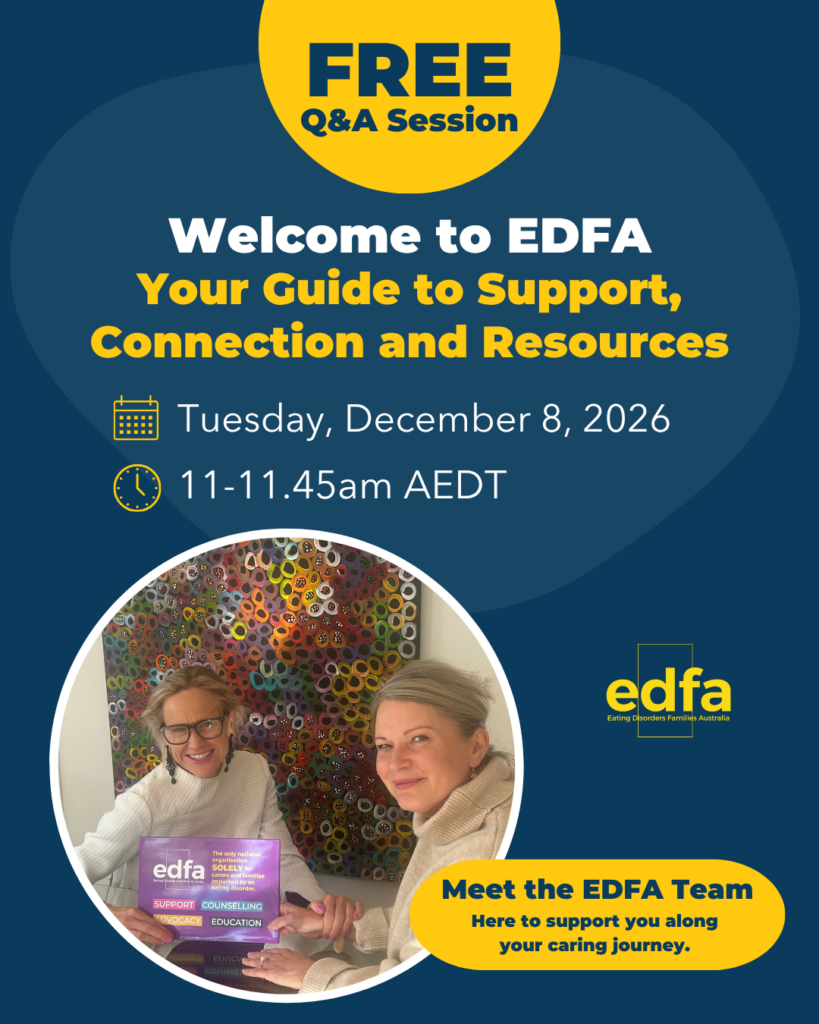
Welcome to EDFA is an opportunity to meet the team and explore the support, connection and resources available to you as a carer. We’ll introduce EDFA’s range of programs and services and explain how to access them when the time is right for you. Whether you’re new to EDFA or have already connected with one of our programs, this session is a chance to learn more, ask questions and discover the different ways EDFA can support you along the way.
Dr Norton has extensive clinical experience as a Senior Paediatric Dietitian working across the acute and community sector in the area of eating disorders, over the past two decades. She is passionate about integrating preventive interventions within the wider community and has research interests include the early years, food communication and preventive interventions. Her PhD; Promoting positive food parenting practices for disordered eating prevention: Adopting a knowledge translation approach (completed in 2023), has resulted in an intervention designed for parents to reduce their child’s risk of developing disordered eating. Dr Norton is passionate about using evidenced based strategies and frameworks adopted from social marketing, co-design and knowledge translation. Dr Norton is currently employed as a research fellow at Western Sydney University working on the SHiNE project (Supporting Healthful Initiatives in Nutrition Education) and is employed as a senior paediatric dietitian with Gold Coast Health Service. Treehouse Nutrition Services is her consultancy business enabling her to collaborate with other organisations, including The Embrace Collective science to assist families in the real world.
This session is open to anyone.
Attendance at our Information sessions should not be used for professional or financial gain. We ask that you do not promote your own services in the chat or Q&A. Thank you for your cooperation.
Thank you to our Information Session presenters who have generously shared their knowledge and time to benefit the EDFA community. You can access the list of past presenters here.
If you are interested in reaching out for further information or to enquire about our Information Sessions, you can contact Coran Johnson, EDucation Coordinator, at education@edfa.org.au.