
“How did I miss the signs?”
Written by Eating Disorders Families Australia Executive Director Jane Rowan

Recently, a South Australian parent posted in Eating Disorders Families Australia’s private carer forum about her child’s eating disorder.
Looking back, she could now see the signs that something was wrong. But at the time, she hadn’t recognised them for what they were.
She was angry with herself. How, she wondered, had she missed them?
It is something we hear from parents and carers far too often.
I should have noticed.
I should have known.
How did I not see what was happening right in front of me?
But parents need to hear this clearly: eating disorders can be incredibly difficult to recognise in their early stages – and not recognising the signs does not mean you have failed your child.
Eating disorders can develop gradually. Early changes can be subtle, and some behaviours can initially look like fairly ordinary parts of adolescence: becoming more interested in health or fitness, changing food preferences, spending more time alone or becoming increasingly particular about food.
People experiencing an eating disorder may also hide or minimise what is happening. That is part of what makes early identification so challenging.
The signs aren’t always what we expect
Many of us still have a mental picture of what an eating disorder looks like. We may expect dramatic weight loss or a young person refusing to eat.
But often there are earlier behavioural and emotional changes.
They might start skipping meals or cutting out certain foods. They might suddenly become very focused on “healthy” or “clean” eating. They may begin counting calories, exercising more rigidly, eating alone, avoiding family meals or social occasions involving food, or becoming distressed when they cannot exercise.
There can also be changes that don’t immediately seem related to food: increased irritability or anxiety, social withdrawal, difficulty concentrating, changes in clothing or increased time spent looking at food, fitness, dieting or body-related content online.
Importantly, you cannot tell whether someone has an eating disorder simply by looking at them. Eating disorders occur in people of all body shapes and weights and weight loss is not required for an eating disorder diagnosis.
When these changes happen gradually – in the middle of school, work, sport, siblings, family meals and everything else that makes up family life – it is easy to understand why individual signs may not immediately ring alarm bells.
I didn’t know what I didn’t know
It’s something I now understand personally.
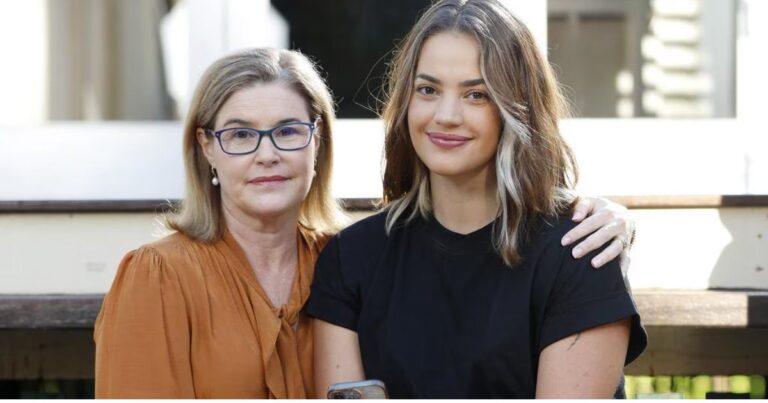
My daughter, Charley, was diagnosed with Anorexia Nervosa at 15. Like so many parents, I could look backwards after her diagnosis and identify things that, with the knowledge I have now, I would recognise differently.
But that knowledge came afterwards.
And when I think back to the period before Charley’s diagnosis, I sometimes wonder what I would have done differently if I had known then what I know now.
There were changes. There were signs.
But I didn’t have an eating disorder checklist running through my head as I went about the normal business of parenting four children, working, and managing family life.
Most parents don’t.
Eating disorders are serious and complex mental illnesses, and Australia’s National Eating Disorders Strategy recognises prevention, early identification, and early intervention as important parts of an effective system of care.
But if we want parents to be part of that early identification, we need to give them the knowledge to do it.
We cannot expect parents to recognise something they have never been taught to recognise.
And that is exactly why Nourish, Nurture, Notice matters.
Turning hindsight into early action
Nourish, Nurture, Notice was created to give parents and carers the knowledge many eating disorder families tell us they wish they had earlier.
The free program helps parents of school-aged children and adolescents understand what disordered eating can look like, recognise changes that may warrant attention, and know when and how to seek further help. It includes a 30-minute online Masterclass as well as opportunities for parents and carers to ask questions about concerns they are seeing at home.
This matters because early action matters. Research consistently shows that early treatment may limit the progression of an eating disorder and improve outcomes overall.
The goal isn’t to make parents hypervigilant about every skipped meal, difficult day, or changing food preference.
It is to give them enough knowledge to notice when a number of small changes begin to form a pattern, and the confidence to ask questions and seek advice.
Most importantly, it is about replacing hindsight with knowledge.
To the parent who looks back and thinks ‘How did I miss this?’, please be kind to yourself.
You saw what you knew how to see at the time.
Our job now is to make sure more parents know what to look for.
Nourish the mind. Nurture the body. Notice the signs.
About Eating Disorders Families Australia
Eating Disorders Families Australia (EDFA) is the only national organisation solely for carers and families of those with an eating disorder. EDFA provides support, EDucation, advocacy, and FREE online counselling services and annual membership. EDFA has a private Facebook forum, providing a safe place for eating disorder carers and family members to share experiences, seek advice and assistance, and find hope.
EDFA’s Fill The Gap counselling service offer free, one-on-one online counselling to support carers in navigating the challenges of caring for a loved one with an eating disorder or disordered eating concerns.
Please contact Administrative Assistant, Bailey Wightman, on 03 9125 5670 or email counselling@edfa.org.au if you need support accessing the service.
EDFA’s Support Groups are open to any carers who are supporting a loved one with an eating disorder. Check out the various diagnosis and carer type groups below.